
Last Updated on: October 29, 2026
Choosing the best watch timing machine for home use can make mechanical watch testing, regulation, and troubleshooting far more straightforward. The right device can reveal daily rate, beat error, amplitude, or quartz timing issues before you open the case or adjust the movement.
Our roundup includes dedicated timegraphers, quartz-focused testers, demagnetizing tools, and a few timing products suited to broader workshop or timing needs. Use the guide below to match the tool’s measurements, pickup method, and operating style to your repair goals.
Best 10 Watch Timing Machine for Home Use Picks for 2026
Best Home Timegrapher
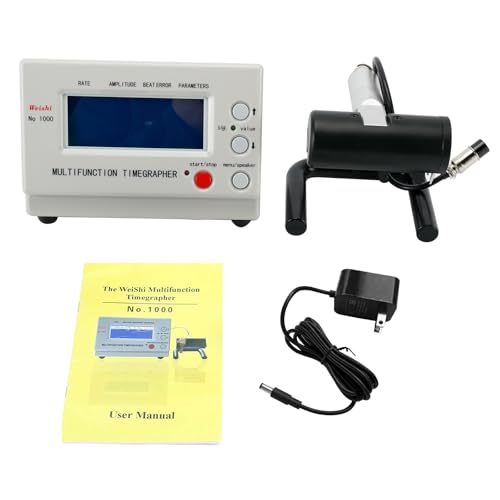
- Measures rate, amplitude, and beat error
- Six positions with selectable sampling periods
- LCD display with real-time tic-tock trace
Best For: Mechanical-watch collectors testing at home
Best Lap Timer

- Two-channel countdown timer
- Measures up to 100 hours to 1/100 second
- Stores up to 100 split or lap times
Best For: Elapsed-time and lap-timing tasks
Best Compact Timegrapher

- Tests almost all mechanical watches
- Measures beats per unit time
- Compact, corded-electric design
Best For: Basic mechanical-watch timing checks at home
Best Printed Stopwatch

- Prints 13 digits per line
- Stores up to 300 split or lap times
- Supports multiple-event memory
Best For: Printed timing records and event tracking
Best All-Around Mechanical Testing

- Measures rate, amplitude, beat error, and beat rate
- Supports six positions and selectable sampling periods
- Includes microphone, adapter, and English manual
Best For: Home users testing and regulating mechanical watches
Best for Printed Timing Records
Seiko 300-Lap Memory Stopwatch
- Stores up to 300 laps
- Prints 13 digits per line
- Supports split/lap and multiple-event memory
Best For: Home timing tasks requiring memory and printed records
Best for Quartz Watch Maintenance

- Tests quartz movements in real time
- Checks lithium and silver oxide batteries
- Adds a built-in demagnetizer
Best For: Home repairers maintaining quartz watches and batteries
Silent Reminder Pick
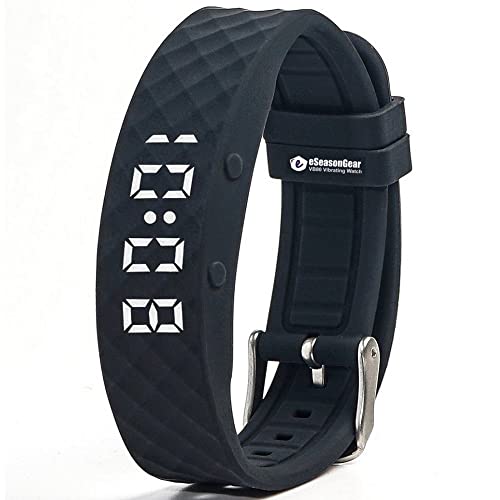
- 12 daily vibrating alarms
- 40-second silent alert
- Rechargeable, splash-proof design
Best For: Silent reminders and recurring alerts
Compact Multi-Tester
Quartz Watch Tester and Demagnetizer

- Tests quartz movements and batteries
- Includes adjustable demagnetization
- Runs on two AA batteries
Best For: Basic home watch servicing and battery checks
Mechanical Calibration Pick
Multifunction Watch Timegrapher

- Measures rate, amplitude, and beat error
- Supports waveform and frequency analysis
- Offers adjustable clips and data transfer
Best For: Home calibration of mechanical watches
Best Home Timegrapher – YaeTek NO.1000 Timegrapher
For shoppers looking for a watch timing machine for home use, the YaeTek NO.1000 offers a dedicated way to check a mechanical watch’s rate, amplitude, and beat error. Its LCD readout, automatic signal adjustment, and selectable sampling periods make it practical for routine collection checks.
Best For: Home mechanical-watch collectors who want multiple testing positions and adjustable measurement periods.
Pros:
- Automatically calculates rate, amplitude, and beat error.
- LCD screen provides real-time readings and a visual tic-tock trace.
- Supports six testing positions and sampling periods from 2 to 60 seconds.
- Uses a 110V-220V US plug.
Cons:
- At 1.37 kg, it is less convenient to move than a small handheld tool.
- The listed amplitude level range is limited to 275-315.
With its broader adjustment options and real-time display, this is the most feature-focused choice here for home timing checks on mechanical watches.
Best Lap Timer – Seiko 100 Lap Dual Timer
The Seiko 100 Lap Dual Timer is not a mechanical-watch timegrapher, but it can suit home users who need precise elapsed-time tracking alongside watch work. It combines two countdown channels with split and lap timing, making it a specialized timing accessory rather than a watch-regulation tester.
Best For: Users who need dual countdown timing and extensive lap or split-time memory.
Pros:
- Provides two independent countdown channels.
- Each channel can be preset for up to 100 hours.
- Measures time to 1/100 of a second.
- Stores and recalls up to 100 split or lap times.
Cons:
- It does not measure mechanical-watch rate, amplitude, or beat error.
- It is a stopwatch and timer rather than a watch timing machine.
Choose this only if your home timing needs involve elapsed time, laps, or countdowns; it is not a substitute for a dedicated timegrapher.
Best Compact Timegrapher – NO.1000 Watch Tester
For a straightforward watch timing machine for home use, this NO.1000 timegrapher is designed to test almost all mechanical watches. Its corded electric design and compact modern format make it a practical option for collectors who want a dedicated measurement tool.
Best For: Home users seeking a compact, corded tester for mechanical-watch beat-rate measurements.
Pros:
- Designed to test almost all mechanical watches.
- Measures beats per unit time.
- Compact dimensions of 6.77 x 1.57 x 4.49 inches.
- CE specification is listed.
Cons:
- The supplied notes do not list amplitude or beat-error measurements.
- It requires corded electric power.
This is a focused alternative for basic mechanical-watch timing checks, especially when compact size matters more than a longer list of displayed measurements.
Best Printed Stopwatch – Seiko S149 Stopwatch/Printer
The Seiko S149 is another timing accessory rather than a watch-regulation machine. For home users who need a stopwatch with printed records, it combines split and lap measurement, multi-event memory, and a built-in printer in a larger format.
Best For: Users who need printed timing records and extensive memory for multiple events.
Pros:
- Measures up to 10 hours to 1/100 of a second.
- Stores and recalls up to 300 split or lap times.
- Supports multiple-event memory and recall during operation.
- Prints 13 digits per line at 1.5 lines per second.
Cons:
- It does not test mechanical-watch rate, amplitude, or beat error.
- Its listed 6 x 9 x 2-inch dimensions make it less compact than a basic stopwatch.
The S149 is best viewed as a documentation-focused stopwatch; it is useful for printed timing records but not for regulating or diagnosing a mechanical watch.
Best All-Around Mechanical Testing – WEISHI No. 1000 Timegrapher
For a watch timing machine for home use, the Howkun WEISHI No. 1000 offers a practical way to evaluate mechanical-watch performance. It displays rate, amplitude, beat error, and beat rate in real time, with automatic signal adjustment and selectable sampling periods for more flexible testing.
Best For: Home users and repairers testing mechanical watches across multiple beat rates and positions.
Pros:
- Measures rate, amplitude, beat error, and beat rate.
- Supports six testing positions and multiple sampling periods.
- Automatically selects common beat rates and includes a broad manual-selection range.
- Includes a microphone, power adapter, and English manual.
Cons:
- It does not include a printer connection.
- The display is relatively compact at 98 × 34 mm.
- It is designed primarily for timing analysis rather than general quartz testing.
With its broad beat-rate support and live mechanical-watch measurements, this is the most fully featured option here for a home bench focused on traditional watch regulation and diagnosis.
Best for Printed Timing Records – Seiko 300-Lap Memory Stopwatch
The Seiko 300 Lap Memory Stopwatch is not a conventional watch timegrapher, but it may suit home users who need a timing device with substantial event memory and printed records. Its split and lap functions provide a straightforward way to capture timing intervals rather than analyze watch-movement behavior.
Best For: Users who want stored lap or split measurements and printed timing output.
Pros:
- Stores up to 300 laps in memory.
- Supports multiple-event memory segregated by event.
- Prints 13 digits per line with large, clear printing.
- Provides split/lap time measurement.
Cons:
- The supplied information does not identify it as a watch timegrapher.
- It does not list mechanical-watch measurements such as amplitude or beat error.
- Its stopwatch-oriented design may not meet watch-repair diagnostic needs.
Choose this only if printed stopwatch-style records are more important than movement analysis. For regulating mechanical watches, the WEISHI model is the more directly relevant tool in this group.
Best for Quartz Watch Maintenance – Pilipane QD20 Quartz Tester
If your home repair work centers on quartz watches, the Pilipane QD20 combines movement testing with battery checking and demagnetizing. This watch timing machine for home use is intended to monitor quartz movement operation, assess button batteries, and address magnetic interference that can affect timekeeping.
Best For: Home repairers and small shops working with quartz movements, batteries, and magnetization issues.
Pros:
- Tests quartz movement operation and detects abnormalities in real time.
- Checks lithium and silver oxide button batteries.
- Includes a built-in demagnetizer for magnetic interference.
- Uses ABS and metal construction.
Cons:
- It is designed for quartz movements rather than mechanical timegrapher measurements.
- The supplied details do not specify rate, amplitude, or beat-error readings.
- No warranty is listed.
The QD20 is a useful multifunction choice when battery testing and demagnetizing matter as much as timing checks. It is less suitable for users seeking detailed mechanical-watch regulation data.
Silent Reminder Pick – VB80 Vibrating Alarm Watch
If you are shopping for a watch timing machine for home use, note that the VB80 serves a different purpose: it is a wearable reminder watch rather than a mechanical watch calibration tool. It provides up to 12 daily vibrating alarms, a 40-second silent alert, and a rechargeable battery designed to last roughly one to four weeks.
Best For: Wearers who need recurring silent reminders, medication alerts, or a vibrating wake-up signal.
Pros:
- Offers 12 daily vibrating alarms.
- Provides a strong, silent 40-second alert.
- Includes 12/24-hour time display and rechargeable power.
- Available with small and large silicone band sizes.
Cons:
- The manufacturer warns that it will not work for deep sleepers.
- It is splash-proof with an IP65 rating, not fully waterproof.
- The USB charger is not included.
The VB80 is a practical home reminder device, but it should not be considered a timing machine for measuring or regulating mechanical watch performance.
Compact Multi-Tester – Quartz Watch Tester and Demagnetizer
For shoppers comparing a watch timing machine for home use, this compact tester is aimed at basic watch servicing rather than full mechanical timegraphing. It combines demagnetization, quartz-movement testing, battery-capacity checking, and pulse testing in a battery-powered unit.
Best For: Home users and repair hobbyists who need a compact tool for quartz checks, battery testing, and demagnetization.
Pros:
- Combines demagnetizer, quartz tester, battery tester, and pulse tester functions.
- Adjustable demagnetization speed supports more practical operation.
- Can test battery capacity without opening the watch case using pulse testing.
- Compact design weighs about 151 grams.
Cons:
- Two AA batteries are required and are not included.
- The supplied notes do not list measurements for daily rate, amplitude, or beat error.
- It is better suited to quartz and battery checks than detailed mechanical calibration.
This is a useful multifunction accessory for basic home watch maintenance, but buyers seeking mechanical-watch timing data should look for a dedicated timegrapher.
Mechanical Calibration Pick – Multifunction Watch Timegrapher
Among these options, this is the closest match for a watch timing machine for home use. It is designed for mechanical-watch calibration and measures daily rate, amplitude, and beat error, while also offering waveform analysis, adjustable settings, sliding clips, and USB/RS232 data transfer.
Best For: Home watchmakers who want timing data for mechanical-watch adjustment and calibration.
Pros:
- Measures daily rate, amplitude, and beat error.
- Supports signal, polarization, oscillation, frequency, and waveform information.
- Adjustable frequency and ascending-angle settings allow more detailed analysis.
- Sliding jaws accommodate different dial sizes, and data can transfer to computers.
Cons:
- Its feature set may be more than needed for simple battery or quartz testing.
- The supplied notes do not specify included cables or software for computer transfer.
- The product is intended for mechanical-watch calibration, not general wearable reminders.
With dedicated mechanical timing measurements and adjustable positioning, this model is the strongest fit for a home bench setup focused on diagnosing and regulating mechanical watches.
How We Picked the Best Watch Timing Machine for Home Use
We compared these products by looking at the type of watches they can test, the measurements they provide, ease of use, portability, and suitability for a home bench. For mechanical watches, useful functions include daily rate, beat error, beat frequency, amplitude, and visual or printed results. For quartz watches, pulse detection, battery testing, and demagnetization may matter more.
We also considered practical details such as acoustic pickups, display clarity, memory, printer compatibility, alarm functions, and whether a tool is better suited to occasional hobby use or repeated repair work. Some listings use similar “timegrapher” language but are designed for different purposes, so verify the specifications before ordering.
Quick Comparison
- Mechanical watch regulation: Choose a dedicated timegrapher with an acoustic pickup and adjustable beat-rate settings.
- Quartz testing: Look for pulse detection, battery evaluation, or movement-testing modes rather than relying on a mechanical timegrapher alone.
- Demagnetizing: A model with a demagnetizer can help address magnetization-related timing problems, but it does not replace proper diagnosis.
- Printed or stored records: Stopwatch and printer systems are useful for documenting timing sessions, though they may not provide the same movement metrics as a timegrapher.
- Small home benches: Compact testers are easier to store, while larger units may offer better controls, displays, or accessory support.
Key Buying Factors for a Watch Timing Machine for Home Use
Measurements and Compatibility
First, confirm that the device supports your movement type. A mechanical timegrapher should list compatible beat frequencies and provide the measurements you actually need. If you work on both mechanical and quartz watches, a multifunction tester may be more versatile, but check how accurate and comprehensive each mode is.
Pickup and Positioning
An acoustic pickup or microphone rail should hold the watch securely and capture a consistent signal. Stable positioning matters because poor contact, ambient noise, or an incorrect angle can produce misleading readings.
Controls and Readability
A clear display, simple mode selection, and adjustable settings make regulation faster. Memory, printing, or data logging can be valuable if you compare several positions or want a record of before-and-after performance.
Build Quality and Support
For occasional home repairs, a basic tester may be sufficient. Frequent users should prioritize durable controls, dependable accessories, replacement pickup availability, and clear documentation. Treat unusually broad feature claims cautiously and compare the full specification sheet.
Who Should Buy Which Watch Timing Machine for Home Use?
Beginners and casual hobbyists should start with an affordable, straightforward mechanical timegrapher that displays the core readings without unnecessary complexity. Experienced watch tinkerers may prefer a multifunction model with more beat-rate options, improved positioning, or memory features. Quartz repairers should choose a dedicated quartz tester or a unit that explicitly supports pulse and battery testing. Small repair shops may benefit from a sturdier system with repeatable pickup placement, broader movement compatibility, and printing or record-keeping features.