
Last Updated on: October 29, 2026
Choosing among digital watch timing machines can be difficult when listings combine timegraphers, quartz testers, demagnetizers, and even unrelated timing watches. The right tool depends on the movement types you service, the measurements you need, and how often you perform adjustments.
This roundup compares ten selected options across mechanical timing, multifunction testing, battery and quartz diagnostics, portability, and workshop value, helping you narrow the field before buying.
Best 10 Digital Watch Timing Machines Picks for 2026
Best Timegrapher for Adjustable Testing
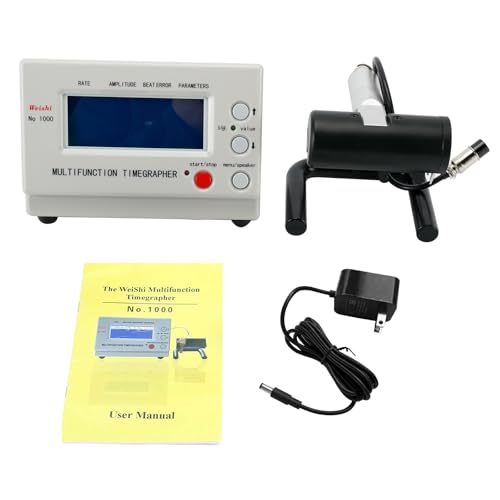
- Measures rate, amplitude, and beat error
- Six positions and selectable sampling periods
- LCD display with automatic signal adjustment
Best For: Mechanical watch collectors needing flexible timing checks
Best Mechanical Stopwatch for Sports Timing
Tookie SXJ504 Handheld Stopwatch

- 1/10-second timing resolution
- One-button start, stop, and reset
- Includes a metronome function
Best For: Sports timing, exercise routines, and refereeing
Best Professional-Style Timegrapher

- Larger LCD screen than the NO.1000
- Supports mechanical and coaxial watches
- 100V-240V power with exchange-plug options
Best For: Watchmakers and collectors testing coaxial movements
Best Digital Chronograph Watch for Everyday Timing
Armitron Sport Women's Digital Chronograph

- Chronograph, alarm, dual time, and backlight
- 100-meter water resistance
- Lightweight resin case and strap
Best For: Daily wear, fitness, swimming, and basic timing
Best Overall Timegrapher

- Large LCD shows rate, amplitude, beat error, and more
- Compatible with most mechanical and coaxial watches
- Easy to use with a one-year warranty
Best For: Collectors, hobbyists, and professional watch users
Best Wearable Digital Watch
Casio AQ-800E-7A Analog-Digital Watch

- Retro analog-digital design with LCD display
- Dual time and 1/100-second stopwatch
- Alarm, auto-calendar, and 30-meter water resistance
Best For: Everyday wear and casual timing tasks
Best for Watchmakers

- Measures rate, amplitude, beat error, and lift angle
- Supports vintage, modern, and coaxial movements
- Larger LCD with 110–220V US plug
Best For: Mechanical-watch repair and regulation work
Compact Multi-Tester
Quartz, Battery & Demagnetizer

- Tests quartz movements and watch batteries
- Includes pulse testing and adjustable demagnetization
- Compact battery-powered design
Best For: Basic watch repair and portable diagnostics
PC-Ready Timegrapher
Mechanical Watch Calibration Meter

- Measures rate, amplitude, and beat error
- Offers frequency, waveform, and angle settings
- Transfers data through USB/RS232
Best For: Mechanical-watch calibration and data analysis
3-in-1 Repair Tool
Battery, Quartz & Demagnetizer

- Tests batteries and quartz movements
- Includes controlled mechanical-watch demagnetization
- Portable build for home or professional workshops
Best For: Routine watch maintenance and troubleshooting
Best Timegrapher for Adjustable Testing – YaeTek Watch Timing Machine
For collectors comparing digital watch timing machines, the YaeTek NO.1000 provides real-time readings for rate, amplitude, and beat error. Its LCD display, automatic signal adjustment, and selectable sampling periods make it a practical tool for checking mechanical watches.
Best For: Mechanical watch collectors who want adjustable timing tests and readable LCD measurements.
Pros:
- Automatically calculates rate, amplitude, and beat error.
- Offers six testing positions and sampling periods from 2 to 60 seconds.
- Uses a visual LCD waveform display and automatic signal-level adjustment.
- Supports a 110V-220V range with a US plug.
Cons:
- Designed for mechanical watches rather than general stopwatch timing.
- The listed rate deviation range is broad at ±999 seconds per day.
With multiple settings and selectable averaging periods, this YaeTek model is a versatile entry-level timegrapher for routine mechanical-watch checks.
Best Mechanical Stopwatch for Sports Timing – Tookie SXJ504 Handheld Stopwatch
Although it is not a watch-testing instrument, the Tookie SXJ504 is a handheld mechanical timer to consider alongside digital watch timing machines. It uses a one-button crown operation, a 1/10-second resolution, and a built-in metronome function for straightforward sports timing.
Best For: Sports referees, runners, cyclists, and fitness users who need a compact mechanical stopwatch.
Pros:
- Starts, stops, and resets through consecutive crown presses.
- Provides 1/10-second resolution.
- Includes a metronome function for tracking exercise rhythms.
- Rated for use from -10°C to +40°C and described as dust, water, shock, and corrosion resistant.
Cons:
- Does not measure watch rate, amplitude, or beat error.
- Its mechanical operation is less suited to automated watch analysis.
The Tookie is best viewed as a practical sports timer, not a timegrapher. Choose it when portable manual timing matters more than mechanical-watch diagnostics.
Best Professional-Style Timegrapher – MTG NO.1900 Watch Tester
OTOOLWORLD New Coaxial MTG Watch Tester Timing Multifunction Timegrapher LCD Screen NO.1900
Check Price On AmazonThe MTG NO.1900 is a strong option among digital watch timing machines for users who want a larger LCD screen and broad watch compatibility. It is designed for almost all mechanical watches and is specifically noted for working better with coaxial watches.
Best For: Watchmakers and collectors testing mechanical or coaxial watches with a larger display.
Pros:
- Offers a larger LCD screen than the NO.1000 model.
- Works with almost all mechanical watches and coaxial watches.
- Designed as a multifunction timegrapher for professional or collection use.
- Supports 100V-240V power and includes exchange-plug options.
Cons:
- The supplied notes do not specify rate, amplitude, or beat-error precision.
- It is corded electric rather than portable battery powered.
For buyers prioritizing screen visibility and coaxial-watch compatibility, the NO.1900 is the more specialized choice in this group, particularly for bench-based testing.
Best Digital Chronograph Watch for Everyday Timing – Armitron Sport Women's Digital Chronograph
The Armitron Sport 45/7012 is a wearable digital chronograph rather than a watch-testing machine. It combines an LCD time display with seconds, day, date, alarm, dual time, backlight, and a 100-meter water-resistance rating for everyday timing and fitness use.
Best For: Users who want a compact digital sports watch for daily wear, exercise, swimming, and basic chronograph timing.
Pros:
- Includes chronograph, alarm, dual-time, and backlight functions.
- Displays time, seconds, day, and date on an LCD screen.
- 100-meter water resistance is suitable for swimming and snorkeling.
- Lightweight resin construction weighs 22.68 grams.
Cons:
- Does not test or regulate mechanical watch movements.
- The acrylic dial window may be less scratch-resistant than harder crystal materials.
This Armitron is a practical alternative when “timing” means wearing a chronograph for sports or daily activities. It should not be confused with a digital timegrapher for watch servicing.
Best Overall Timegrapher – No.1900 Watch Tester
For collectors or repairers comparing digital watch timing machines, the No.1900 offers a straightforward way to monitor key mechanical-watch readings. Its larger LCD screen displays live rate, amplitude, beat error, beats per hour, and lift angle, and it is designed to work with almost all mechanical watches, including coaxial movements.
Best For: Watch collectors, hobbyists, and professionals who want an easy-to-use digital timegrapher with broad mechanical-watch compatibility.
Pros:
- Larger, easy-to-read LCD screen with multiple timing measurements.
- Works with almost all mechanical watches, including coaxial watches.
- Simple operation suitable for beginners and professional users.
- Includes a one-year warranty and customer support.
Cons:
- Designed for mechanical watches rather than quartz models.
- Uses AC power, so it is less convenient for untethered use.
- Mineral glass and a non-water-resistant construction are not intended for wrist wear.
The No.1900 is a practical all-around choice when clear readings and simple operation matter more than portability. Its compatibility with coaxial movements adds useful flexibility for a mixed collection.
Best Wearable Digital Watch – Casio AQ-800E-7A Analog-Digital Watch
Unlike dedicated digital watch timing machines, the Casio AQ-800E-7A is a wearable analog-digital watch built for everyday timekeeping. Its retro design combines an analog dial with an LCD display, while dual time, a 1/100-second stopwatch, an alarm, and an hourly signal add practical timing functions.
Best For: Shoppers seeking a lightweight everyday watch with vintage styling and useful digital timing features.
Pros:
- Distinctive 1980s-inspired analog-digital design.
- Includes dual time and a 1/100-second stopwatch.
- Daily alarm, hourly time signal, auto-calendar, and 12/24-hour format.
- Stainless steel band, adjustable clasp, and 30-meter water resistance.
Cons:
- It is a quartz wristwatch, not a mechanical-watch diagnostic machine.
- Water resistance is intended for routine exposure rather than swimming.
- Stopwatch capacity is limited to 59 minutes, 59.99 seconds.
The Casio is the right fit if “timing” means everyday stopwatch and time-zone functions on the wrist. It should not be confused with a timegrapher for regulating mechanical movements.
Best for Watchmakers – YaeTek No.1900 Timegrapher
The YaeTek No.1900 is a dedicated digital watch timing machine for diagnosing and regulating mechanical watches. Its LCD screen reports rate, amplitude, beat error, beats per hour, and lift angle, while the compact unit supports vintage, modern, and coaxial movements.
Best For: Watchmakers and experienced collectors who need a multifunction tester for mechanical-watch diagnostics.
Pros:
- Combines rate, beat error, amplitude, frequency, and lift-angle measurements.
- Larger LCD screen improves visibility compared with the No.1000.
- Compatible with almost all mechanical watches, including coaxial calibers.
- Supplied with a 110–220V US plug for flexible electrical compatibility.
Cons:
- Intended for mechanical-watch testing, not general wearable timekeeping.
- At 3.06 pounds, it is less convenient to move than a lightweight handheld tool.
- The supplied notes do not specify a warranty.
With its broad measurement set and mechanical-watch compatibility, the YaeTek No.1900 is well suited to a workbench. Its larger display also makes readings easier to review during adjustment and diagnosis.
Compact Multi-Tester – Quartz, Battery & Demagnetizer
For shoppers comparing digital watch timing machines, this compact battery-powered tester is designed for practical watch-service tasks. It combines quartz-movement checking, battery testing, pulse testing, and adjustable demagnetization in one portable unit.
Best For: Watchmakers, repair workers, and hobbyists who want several basic diagnostic functions in a compact tool.
Pros:
- Combines quartz testing, battery testing, pulse testing, and demagnetization.
- Adjustable demagnetization speed supports more controlled use.
- Compact 151 g design is easy to keep in a toolbox or work area.
Cons:
- Requires two 1.5V AA batteries, which are not included.
- Its listed functions focus on basic testing and demagnetization rather than advanced timing analysis.
This is a practical choice when portability and multifunction operation matter more than detailed mechanical-watch calibration data. Its battery-powered design and broad feature set make it a useful general repair accessory.
PC-Ready Timegrapher – Mechanical Watch Calibration Meter
This timegrapher is the most analysis-focused option among these digital watch timing machines. It is built for mechanical-watch calibration, measuring daily rate, amplitude, beat error, frequency-related data, and waveform information while supporting USB/RS232 computer transfer.
Best For: Users calibrating mechanical watches who want broader measurements and the ability to transfer data to a computer.
Pros:
- Supports daily rate, amplitude, beat error, signal, polarization, oscillation, and waveform-related analysis.
- Adjustable frequency and ascending-angle settings provide additional configuration.
- Sliding, removable jaws accommodate different dial sizes.
- USB/RS232 connectivity supports data transfer to tablets, laptops, and desktops.
Cons:
- Its feature set is aimed at mechanical-watch calibration rather than general battery testing.
- The supplied information does not specify included accessories or software details.
Choose this model if measurement depth and computer-based recordkeeping are priorities. The adjustable holder and data-transfer capability make it better suited to calibration workflows than a simple portable tester.
3-in-1 Repair Tool – Battery, Quartz & Demagnetizer
This 3-in-1 tool gives shoppers a straightforward alternative among digital watch timing machines for routine repair work. It combines button-battery testing, quartz-movement diagnostics, and mechanical-watch demagnetization in a compact, portable housing.
Best For: Home workshops and repair benches needing quick battery checks plus quartz testing and controlled demagnetization.
Pros:
- Combines three useful functions in one compact device.
- Responsive sensor is designed for quick button-battery voltage checks.
- On/off-controlled demagnetizer helps manage magnetic interference in mechanical watches.
- Rugged plastic and reinforced metal parts are intended for frequent use.
Cons:
- The supplied notes do not list computer connectivity or detailed timing measurements.
- Its compact format may be less suitable for advanced calibration workflows.
This model is a sensible space-saving choice for general watch maintenance. It emphasizes fast troubleshooting and portability, while its demagnetization feature adds useful support for mechanical-watch servicing.
How We Picked These Digital Watch Timing Machines
We selected products to represent the main categories shoppers encounter when searching for Digital Watch Timing Machines: mechanical timegraphers, multifunction watch testers, quartz and battery testers, demagnetizers, and compact timing devices. We considered the stated functions, display format, included testing hardware, movement compatibility, calibration use, and suitability for home or professional repair work.
Because product listings can use similar terminology for very different tools, check the specifications carefully. A timegrapher designed for mechanical movements is not automatically a quartz tester, and a digital watch with a stopwatch is not a watch-repair diagnostic machine.
Quick Comparison
| Tool Type | Best For | What to Check |
|---|---|---|
| Mechanical timegrapher | Rate, amplitude, beat error, and beat numbers | Acoustic pickup, lift-angle settings, and display data |
| Multifunction tester | General repair benches and mixed tasks | Whether battery, quartz, and demagnetizing functions are included |
| Quartz or battery tester | Pulse checks and battery-powered movements | Supported movement types and testing method |
| Demagnetizer | Removing magnetization from components | Operating procedure, controls, and safe use instructions |
| Stopwatch or digital watch | Event timing and everyday timing tasks | Do not confuse it with a calibration instrument |
Key Buying Factors for Digital Watch Timing Machines
Movement Compatibility
Start by identifying whether you work on mechanical, automatic, quartz, or battery-powered movements. Mechanical timegraphers use the movement’s audible beat to calculate timing performance, while quartz testers evaluate electrical pulses or operating behavior.
Measurements and Functions
For mechanical regulation, look for daily rate, amplitude, beat error, beat rate, and a clear waveform or trace. If you service quartz watches, prioritize pulse and battery testing. Multifunction machines can save bench space, but only if their extra modes support your actual workflow.
Pickup and Setup
An acoustic pickup rail or clip can make mechanical testing easier, especially when you need consistent positioning. Consider display readability, control layout, power requirements, and whether the unit includes the necessary sensor or connection hardware.
Calibration and Accuracy
A tester is useful only when its readings are consistent. Follow the manufacturer’s setup instructions, use a stable surface, and compare questionable readings with a known reference. Do not treat an inexpensive instrument as a substitute for professional calibration without verifying its stated accuracy.
Who Should Buy Which Digital Watch Timing Machines?
Choose a dedicated mechanical timegrapher if your main goal is regulating mechanical or automatic watches. It typically provides the most relevant timing information without paying for functions you will not use.
A multifunction tester is a better fit for a hobbyist or repair bench handling several movement types. Select a quartz, battery, or demagnetizer-focused tool when those specific tasks make up most of your work. For sports, travel, or everyday timing rather than watch repair, a stopwatch or analog-digital watch is the more appropriate choice.
Before ordering, confirm the model name, included accessories, power supply, return policy, and seller specifications. These checks help prevent buying a general timing device when you actually need a watch-calibration instrument.