
Last Updated on: November 14, 2026
Testing a watch’s water resistance is easier and more consistent with the right pressure tester. Affordable models can help watchmakers, repair technicians, and careful hobbyists identify potential leaks before a case goes near water.
These 10 watch pressure testers under $50 vary in pressure range, chamber design, capacity, and ease of operation. Use the guide below to match the tester’s specifications with the watches and repair work you handle most often.
Best 10 Watch Pressure Testers Under 50 Picks for 2026
Best Overall Value
Transparent Cylinder Watch Pressure Tester
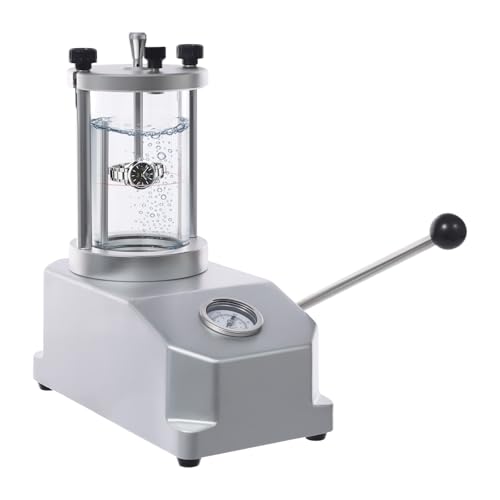
- 0.3–6.0 bar testing range
- Clear chamber for bubble detection
- Suitable for quartz and mechanical watches
Best For: Home users and repair shops needing a visible, manual leak tester
Best for Two-Watch Testing
Dual-Capacity Watch Waterproof Tester

- Tests two watches simultaneously
- 0.3–6.0 bar operating range
- Large gauge and transparent chamber
Best For: Repair users seeking higher testing throughput
Best for Efficient Workflows
- Simultaneous testing for two watches
- Clear bubble and oil-stain observation
- Ready-to-use compact design
Best For: Watchmakers and advanced DIY users testing multiple watches
Best for Controlled Manual Testing
- 0.3–6.0 bar gauge
- Manual pump and exhaust valve
- Works with quartz and mechanical watches
Best For: Repair shops and serious enthusiasts wanting controlled testing
Best Value Manual Tester
- Tests two watches simultaneously
- Transparent cylinder for leak observation
- Fits many mechanical and quartz watches
Best For: Home users and basic watch repair
Most Versatile Tester
10-Bar Dual Watch Pressure Tester
- Up to 10 bar cylinder pressure
- Tests two watches simultaneously
- No assembly required
Best For: Repair shops and frequent watch testing
Best Space-Saving Option

- Compact footprint for easy storage
- Tests two watches at once
- Works with many mechanical and quartz watches
Best For: Small home benches and repair spaces
Best Overall
- Tests two watches simultaneously
- Fits cases up to 2.6 inches wide
- Clear cylinder and large pressure dial
Best For: Efficient testing of mechanical and quartz watches
Best Compact Pick
10-Bar Watch Water Resistance Tester

- Manual dual-watch testing
- Compact aluminum and glass construction
- Transparent cylinder with analog gauge
Best For: Routine testing where storage space is limited
Best for Visual Monitoring
High-Visibility Watch Pressure Tester

- Transparent cylinder for leak observation
- Oversized pressure gauge
- Dual-watch testing with broad compatibility
Best For: Close visual monitoring during water-resistance checks
Best Overall Value – Transparent Cylinder Watch Pressure Tester
For shoppers comparing watch pressure testers under 50, this manual tester offers a useful balance of visible leak detection, broad pressure adjustment, and sturdy construction. Its transparent cylinder lets you monitor the watch case during testing, while the 0.3–6.0 bar range suits many home and repair-shop applications.
Best For: Home users, watch enthusiasts, and repair shops wanting a compact manual tester with clear bubble detection.
Pros:
- Transparent glass cylinder supports visual monitoring during pressure testing.
- Adjustable 0.3–6.0 bar test range with a stated 10 bar maximum cylinder pressure.
- Works with both quartz and mechanical watches.
- Includes a manual shake lever and exhaust button with no assembly required.
Cons:
- Manual operation requires hands-on pumping and pressure release.
- Its 3.4 kg weight may be more than casual users need.
With its clear chamber, stable foot pads, and included 360-day warranty, this is a practical all-around choice for buyers prioritizing straightforward operation and visible results.
Best for Two-Watch Testing – Dual-Capacity Watch Waterproof Tester
Among watch pressure testers under 50, this model stands out for its stated ability to test two watches simultaneously. The transparent chamber and large gauge provide direct visibility and pressure readings, while the 0.3–6.0 bar operating range supports routine sealing checks.
Best For: Repair environments where testing two compatible watches at once can improve workflow efficiency.
Pros:
- Supports simultaneous testing of two watches.
- Transparent glass chamber and large pressure gauge aid visual monitoring.
- Accommodates watches up to 2.6 inches in diameter and 2.8 inches in height.
- Aluminum alloy, glass, and rubber construction is designed for repeated use.
Cons:
- No warranty is specified in the supplied details.
- Compatibility is limited by the stated chamber dimensions.
This is a workflow-focused option for users who value dual-watch capacity, provided their watches fit within the listed size limits.
Best for Efficient Workflows – Dual Watch Pressure Tester
This watch pressure tester under 50 combines dual-watch testing with a transparent glass cylinder and large pressure dial. It is designed to help users identify leaks through visible bubbles or oil stains while covering a 0.3–6.0 bar range for different water-resistance checks.
Best For: Watchmakers and advanced DIY users who want faster testing and clear visual inspection in a compact setup.
Pros:
- Tests two watches at the same time.
- Supports watches up to 2.6 inches in diameter and 2.8 inches in height.
- Transparent cylinder helps reveal bubbles and oil stains associated with sealing issues.
- Ships ready to use without assembly and includes non-slip foot pads.
Cons:
- Manual pressure operation may be less convenient than an automated system.
- Supplied details do not specify a conventional product warranty.
Its dual-capacity design and clear inspection chamber make it a strong choice for repeat testing, especially when bench space and turnaround time matter.
Best for Controlled Manual Testing – Air Pressure Watch Tester
For buyers searching for watch pressure testers under 50, this manual air-pressure model emphasizes controlled operation and straightforward visual inspection. Its 0.3–6.0 bar gauge, transparent cylinder, manual pump, and exhaust valve provide a complete process for checking compatible quartz and mechanical watches.
Best For: Repair shops and serious enthusiasts who want a manual tester with defined pressure control and a safety margin.
Pros:
- 0.3–6.0 bar pressure gauge supports a broad testing range.
- Transparent cylinder makes air bubbles easier to observe.
- Manual pump and exhaust valve allow controlled pressure application and release.
- Stated 10 bar maximum cylinder pressure exceeds the test range.
Cons:
- At 8.82 pounds, it is relatively heavy for a compact bench tool.
- Manual operation requires user-controlled pumping and venting.
- Its chamber dimensions may not suit larger watches.
This model is a sensible fit for users who prefer hands-on pressure control, provided the watch dimensions fall within its stated 2.6-inch diameter and 2.8-inch height capacity.
Best Value Manual Tester – Compact Watch Pressure Tester
If you need watch pressure testers under 50 for basic water-resistance checks, this manual tester offers a straightforward design for home users and watch repair work. Its transparent cylinder and analog pressure dial make the testing process easy to monitor.
Best For: Home watch enthusiasts and repair users who need to test two watches at once.
Pros:
- Tests two watches simultaneously to improve efficiency.
- Transparent glass cylinder helps identify potential case leaks.
- Supports watches up to 2.6 inches in diameter and 2.8 inches in height.
- Aluminum-alloy and glass construction is designed for durability.
Cons:
- The listed pressure test range is limited to 0.3–0.6 bar.
- Its 7.5-pound weight may make it less convenient to move frequently.
This is a practical entry-level option when you want dual-watch testing, clear visual monitoring, and simple manual operation without a more elaborate setup.
Most Versatile Tester – 10-Bar Dual Watch Pressure Tester
Among watch pressure testers under 50, this model stands out for its stated 10-bar cylinder pressure and dual-watch design. It combines a transparent glass chamber, large pressure dial, and no-assembly setup for convenient testing at home or in a repair shop.
Best For: Watchmakers and repair shops that want a ready-to-use tester with broader pressure capabilities.
Pros:
- Offers a 0.3–6.0 bar air-pressure test range and up to 10 bar cylinder pressure.
- Tests two watches at the same time.
- Requires no assembly and is designed for simple manual operation.
- Compact 9.5 × 5.5 × 10.6-inch size helps conserve storage space.
Cons:
- Its 7.5-pound weight is relatively substantial for a compact tool.
- Maximum supported watch dimensions are 2.6 inches in diameter and 2.8 inches in height.
Choose this version if you value a wider stated testing range, dual-watch throughput, and a setup that can be used immediately after unpacking.
Best Space-Saving Option – Watch Waterproof Test Tool
This compact option is worth considering if you are comparing watch pressure testers under 50 for a home bench, watch shop, or repair workspace. It tests two watches at once and uses a transparent cylinder with a large dial for straightforward observation.
Best For: Users who need a dual-watch tester that fits easily into a small workspace.
Pros:
- Compact 9.5 × 5.5 × 10.6-inch design is easy to store.
- Can test two watches simultaneously.
- Compatible with most mechanical and quartz watches within its stated size limits.
- Suitable for home, watch-shop, and repair-shop use.
Cons:
- The listed air-pressure test range is 0.3–0.6 bar.
- At 8.8 pounds, it is heavier than its compact footprint may suggest.
This model makes the most sense when workspace is limited and you want a dedicated manual tester for routine waterproof-performance checks.
Best Overall – Dual-Watch Pressure Tester
If you are comparing watch pressure testers under 50, this model stands out for its dual-watch capacity, broad case compatibility, and clear analog pressure monitoring. Its transparent cylinder also helps you observe the test while checking a watch’s water resistance.
Best For: Watch owners or repair users who want to test two mechanical or quartz watches at once.
Pros:
- Tests two watches simultaneously to improve efficiency.
- Accommodates watches up to 2.6 inches in diameter and 2.8 inches in height.
- Transparent glass cylinder and large pressure dial make testing easier to observe.
- Glass and aluminum-alloy construction is designed for durability.
Cons:
- Its 9.5 x 5.5 x 10.6-inch size may require dedicated storage space.
- At 8.8 pounds, it is not especially lightweight.
- The listed test range is 0.3–0.6 bar, so buyers should confirm it suits their testing needs.
This is a practical choice when efficiency and visibility matter. The ergonomic handle and dual-watch setup make it especially useful for repeated testing, while the sturdy construction adds confidence for regular use.
Best Compact Pick – 10-Bar Watch Water Resistance Tester
Among watch pressure testers under 50, this manual tester is a useful option for buyers who value compact storage and straightforward operation. It supports two watches at once and uses a transparent cylinder with an analog gauge for visual monitoring.
Best For: Users who need a compact, manually operated tester for routine watch water-resistance checks.
Pros:
- Dual-watch design can improve testing efficiency.
- Compact 9.5 x 5.5 x 10.6-inch body is easier to store.
- Transparent glass cylinder helps reveal potential case leaks.
- Soft rubber handle and long lever support more comfortable operation.
Cons:
- Manual operation requires the user to supply the air pressure.
- The listed air-pressure testing range is 0.3–0.6 bar, despite the product title referencing 10 bar.
- Its 7.5-pound weight may be substantial for portable use.
This model balances practical features with relatively space-conscious construction. Its dual-watch capacity and clear viewing chamber are useful advantages, but buyers should carefully review the pressure specifications before ordering.
Best for Visual Monitoring – High-Visibility Watch Pressure Tester
For shoppers comparing watch pressure testers under 50, this model emphasizes visibility during testing. Its transparent cylinder, oversized pressure gauge, dual-watch capacity, and compact footprint make it suited to users who want to monitor the process closely.
Best For: Users who prioritize clear visual inspection and simultaneous testing of two watches.
Pros:
- Transparent cylinder supports direct observation during testing.
- Oversized gauge is designed for easier pressure monitoring and adjustment.
- Tests two watches simultaneously.
- Fits watches up to 2.6 inches in diameter and 2.8 inches in height.
Cons:
- The supplied notes list a 0.3–0.6 bar air-pressure range, which may require specification verification.
- Its 9.5 x 5.5 x 10.6-inch dimensions are compact but not miniature.
- The available details do not specify an included accessory set beyond the tester.
This tester is appealing when seeing the case and gauge clearly is a priority. Its aluminum-alloy and glass construction should suit regular use, while the dual-watch design can help streamline repeated checks.
How We Picked the Best Watch Pressure Testers Under 50
We focused on practical features that affect everyday testing: pressure range, readable measurement, chamber visibility, operating method, capacity, and suitability for common mechanical, quartz, and electronic watches. We also considered whether each design supports single-watch or dual-watch testing and whether its controls appear straightforward for home or workshop use.
At this price, these tools should be viewed primarily as pressure-testing aids rather than substitutes for certified dive-watch testing equipment. Always follow the manufacturer’s procedure and inspect gaskets, crystals, crowns, and case backs before testing.
Quick Comparison
| Feature | What to look for | Best suited to |
|---|---|---|
| Pressure range | About 0.3–6 bar for general work; up to 10 bar for broader testing | Everyday watches or higher-rated cases |
| Testing capacity | Single chamber or dual-watch setup | Occasional users or repair benches |
| Chamber design | Transparent cylinder with clear markings | Visual monitoring and easier setup |
| Operation | Manual air-pump or pressure-control mechanism | Portable, budget-conscious testing |
Key Buying Factors for Watch Pressure Testers Under 50
Pressure Range and Watch Ratings
Choose a tester that covers the pressure level relevant to your work. A 0.3–6 bar model is suitable for many routine checks, while a 10-bar tester offers more headroom for watches marketed for greater water resistance. Do not assume the maximum gauge value makes a tester appropriate for every case; correct adapters, seals, and procedures matter just as much.
Visibility and Measurement
A transparent cylinder makes it easier to position the watch and observe the chamber during testing. Look for a legible gauge, stable base, and controls that allow pressure to be applied gradually. Clear readings are more useful than an unnecessarily complicated control layout.
Capacity and Workflow
Single-watch testers generally take less space and suit occasional repairs. Dual-watch models can improve efficiency when checking multiple cases, but they may require more careful positioning and sealing. Confirm that the chamber and holders accommodate the case sizes you commonly service.
Build Quality and Safe Use
Inspect the lid, fittings, tubing, seals, and pressure-release valve before every use. Avoid exceeding the tester’s stated limit, and release pressure fully before opening the chamber. A pressure tester can reveal possible leakage, but it cannot repair a compromised case or guarantee safe underwater use after a failed test.
Who Should Buy Which Watch Pressure Testers Under 50?
For Occasional Home Repairs
Choose a compact manual tester with a transparent chamber and a straightforward 0.3–6 bar range. It provides useful basic checks without taking up much bench space.
For Watchmakers and Repair Shops
A dual-watch or 10-bar model may be the better fit if you test several cases each day or handle watches with higher stated resistance ratings. Prioritize stable construction, readable controls, and readily replaceable seals.
For Hobbyists Learning Case Maintenance
Start with the simplest reliable design. Practice on known-safe watches, verify seals separately, and treat the tester as one part of a broader inspection process rather than definitive proof that a watch is ready for swimming or diving.