
Last Updated on: November 14, 2026
Finding water-resistance problems before they damage a movement is easier with the right pressure tester. This roundup compares 10 watch pressure testers under $300, including dual-watch, transparent-cylinder, manual, and electric designs.
We focus on practical testing range, build quality, operating convenience, visibility, and suitability for watch repair work so you can choose a tester that matches your bench setup and testing routine.
Best 10 Watch Pressure Testers Under 300 Picks for 2026
Professional Dual-Test Pick

- Tests two watches simultaneously
- 0.3–6.0 bar air-pressure range
- Transparent chamber and pressure dial
Best For: Repair shops and frequent watch testing
Accuracy-Focused Choice
Dual Watch Water Resistance Tester

- Tests two watches at the same time
- 0.3–6.0 bar test range
- Compact alloy construction
Best For: Routine workshop seal testing
Simple Bubble-Test Option

- Checks two watch cases simultaneously
- Transparent cylinder for leak viewing
- Uses an immersion bubble method
Best For: Visual seal checks during watch repair
Compact Professional Pick
Transparent Watch Leak Detector
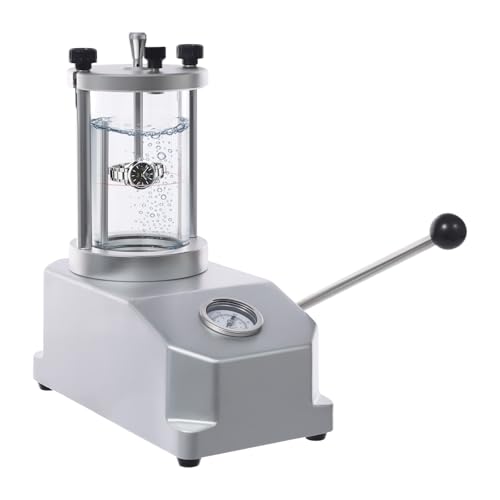
- 0.3–6.0 bar air-pressure range
- 10-bar maximum cylinder pressure
- Manual, no-assembly operation
Best For: Home and repair-shop watch testing
Professional Glass-Chamber Tester
- Durable glass and aluminum-alloy construction
- Large gauge with transparent viewing chamber
- Tests two watches at once
Best For: Manual workshop testing of quartz and mechanical watches
Workshop Analog Tester
Watch Case Pressure Testing Machine
- Glass cylinder enables visual inspection
- Analog dial supports pressure monitoring
- Tests two watches simultaneously
Best For: Straightforward watchmaker and repair-shop testing
Electric Vacuum System

- Electric vacuum testing for efficient operation
- Supports two watches simultaneously
- Includes transparent tank and power supply
Best For: Users wanting an electric, observation-friendly tester
Compact Dual-Watch Tester
Professional 10-Bar Watch Pressure Tester

- Tests two watches at once
- Transparent cylinder and large pressure dial
- Fits cases up to 2.6 inches wide
Best For: Home, retail, and repair-shop water-resistance checks
Clear-View Shop Tester
Dual-Watch Underwater Pressure Tester

- Dual-watch testing improves workflow
- Glass cylinder supports leak observation
- Compact aluminum-and-glass construction
Best For: Users prioritizing visibility and efficient manual testing
Ergonomic Repair Detector
Dual-Watch 10-Bar Pressure Tester

- Long rubber handle improves grip comfort
- Tests two watches simultaneously
- Transparent chamber aids leak detection
Best For: Repair benches needing comfortable manual operation
Professional Dual-Test Pick – 10-Bar Watch Pressure Tester
For shoppers comparing watch pressure testers under 300, this professional-style model stands out for its dual-watch capacity and broad pressure simulation range. It tests air pressure from 0.3 to 6.0 bar, with a cylinder rated up to 10 bar, while its transparent chamber helps you inspect potential leak points.
Best For: Watch repairers, watch shops, and experienced home users who want to test two watches at once.
Pros:
- Tests two watches simultaneously to improve workflow.
- Supports testing scenarios associated with daily wear, swimming, and diving.
- Sturdy aluminum, glass, and rubber construction with non-slip feet.
- Arrives assembled and includes a clear pressure dial.
Cons:
- Its 7.5-pound weight may be more than casual users need.
- The listed 2.6-inch diameter and 2.8-inch height limits may not suit every case.
This is a strong efficiency-focused option when repeat testing matters. Its dual-watch design and visual inspection chamber make it especially practical for repair benches, although its larger professional construction may be unnecessary for occasional testing.
Accuracy-Focused Choice – Dual Watch Water Resistance Tester
Advanced Watch Water Tool for Reliable Water Resistance Testing of Two Watches Simultaneously
Check Price On AmazonAmong watch pressure testers under 300, this dual-watch tool emphasizes straightforward operation and repeatable water-resistance checks. Its 0.3–6.0 bar test range and transparent cylinder help users inspect seal performance while testing two watches in the same workflow.
Best For: Watchmakers and repair businesses that prioritize simultaneous testing and a compact workshop setup.
Pros:
- Tests two watches simultaneously.
- Offers a 0.3–6.0 bar pressure test range.
- Transparent cylinder makes leaks easier to observe.
- Alloy construction is designed for regular use.
Cons:
- The supplied notes do not specify a maximum cylinder pressure.
- At 8.2 pounds, it is not especially lightweight for portable use.
- Detailed case-size compatibility information is not provided.
This model makes sense for users who want a focused, dual-watch testing tool without adding unnecessary complexity. It offers the key pressure range and visual inspection features needed for routine seal checks, but buyers needing precise size limits should confirm fit before ordering.
Simple Bubble-Test Option – Ejoyous Dual Watch Tester
Ejoyous Watch Tester, Watch Underwater Pressure Tester 2 Watches Case Pressure Test Machine
Check Price On AmazonFor anyone comparing watch pressure testers under 300, the Ejoyous model uses an underwater bubble-check method to assess watch-case seals. Its transparent cylinder lets you observe the test, and its dual-watch design can help reduce time spent on repeated servicing tasks.
Best For: Watchmakers and repairers who prefer a direct, visual bubble-detection approach.
Pros:
- Tests two watch cases simultaneously.
- Transparent cylinder supports visual leak inspection.
- Uses a straightforward immersion method to check seals.
- Designed as a watchmaking and repair tool.
Cons:
- The supplied notes do not list a pressure range.
- They do not specify dimensions, weight, or case-size limits.
- The listing identifies a corded-electric power source, so setup details may need verification.
This is a practical choice if visual bubble detection is your preferred testing method and you value dual-watch capacity. However, buyers seeking pressure-range specifications or detailed fit information may want to confirm those details before purchase.
Compact Professional Pick – Transparent Watch Leak Detector
This compact leak detector is a compelling entry among watch pressure testers under 300 for users who want a manual tester with clear visual monitoring. It provides a 0.3–6.0 bar air-pressure range, up to 10 bar maximum cylinder pressure, and a 6.5 cm listed diameter for watch-case testing.
Best For: Home users, watch shops, and repair shops needing a ready-to-use manual tester for quartz and mechanical watches.
Pros:
- Offers 0.3–6.0 bar air-pressure testing with a 10-bar maximum cylinder pressure.
- Transparent cylinder supports bubble-based leak detection.
- Manual shake lever and exhaust button require no assembly.
- Anti-slip feet and aluminum, glass, and rubber construction support stable use.
Cons:
- The 7.5-pound weight may limit portability.
- The listed 6.5 cm diameter may not accommodate every watch case.
- Manual operation requires hands-on testing rather than automated measurement.
With its compact footprint, broad stated pressure range, and simple manual controls, this tester is well suited to routine bench work. It offers useful compatibility across quartz and mechanical watches, but case dimensions should be checked before ordering.
Professional Glass-Chamber Tester – Dual Watch Pressure Tester
For shoppers comparing watch pressure testers under 300, this model offers a practical manual setup for checking case sealing. Its transparent chamber, pressure gauge, and dual-watch capacity suit repeated testing in repair environments.
Best For: Watch repairers and makers who need a durable, manually operated tester for quartz and mechanical watches.
Pros:
- Durable glass, aluminum-alloy, and rubber construction.
- Transparent chamber and large gauge support visual pressure monitoring.
- Can test two watches simultaneously.
- Fits many watches up to 2.6 inches in diameter and 2.8 inches in height.
Cons:
- Requires manual operation rather than an electric system.
- The supplied notes do not specify a warranty.
With a 0.3–6.0 bar operating range, this tester provides broad pressure adjustment and a stable, ergonomic design. It is a strong option when visibility and workshop durability matter more than automation.
Workshop Analog Tester – Watch Case Pressure Testing Machine
Among watch pressure testers under 300, this analog model focuses on straightforward case testing for watchmakers. Its glass cylinder and pressure dial make it easier to observe the test and monitor adjustments during use.
Best For: Watch repair users seeking a durable analog tester with two-watch testing capacity.
Pros:
- Uses sturdy glass and aluminum-alloy materials.
- Transparent cylinder helps reveal potential case sealing issues.
- Tests two watches simultaneously to improve workflow.
- Designed for most mechanical and quartz watches within its stated size limits.
Cons:
- The listed pressure range is relatively narrow at 0.3–0.6 bar.
- It is a manual analog tester, not an electric system.
The soft rubber handle and long ergonomic grip support repeated operation, while the 7.5-pound weight may help keep the unit steady. Check your watch dimensions and required pressure range before buying.
Electric Vacuum System – Dual Watch Waterproof Tester
If you are comparing watch pressure testers under 300 and want less manual handling, this electric vacuum pressure tester is designed for efficient wristwatch testing. It supports simultaneous testing and includes a power supply for setup.
Best For: Workshops or personal users who prefer an electric tester with a visible tank and dual-watch capacity.
Pros:
- Electric vacuum pressure system supports efficient operation.
- Can test two watches at the same time.
- Aluminum-alloy case is built for durability.
- Transparent tank allows visual observation during testing.
Cons:
- Requires access to power through the included power supply.
- The supplied notes do not provide a specific pressure range.
This model is differentiated by its electronic operation and testing without opening the case back, according to the supplied product information. Its approximately 3.11-by-5.51-inch transparent tank also makes observation convenient.
Compact Dual-Watch Tester – Professional 10-Bar Watch Pressure Tester
For shoppers comparing watch pressure testers under 300, this compact manual tester offers a practical way to evaluate the sealing performance of two watches at once. Its transparent cylinder and analog pressure gauge make the test process easy to observe.
Best For: Home users, watch shops, and repair shops that need a compact tester for mechanical and quartz watches.
Pros:
- Tests two watches simultaneously to improve efficiency.
- Transparent glass cylinder helps reveal potential case leaks.
- Accommodates watches up to 2.6 inches in diameter and 2.8 inches in height.
- Compact aluminum, glass, and rubber construction is easy to store.
Cons:
- Listed air-pressure testing range is 0.3–0.6 bar, despite the 10-bar product naming.
- Its relatively large watch capacity may not suit every unusually sized case.
This is a space-conscious choice for routine water-resistance checks, especially when testing multiple watches matters more than advanced electronic controls.
Clear-View Shop Tester – Dual-Watch Underwater Pressure Tester
Among watch pressure testers under 300, this dual-watch model stands out for its clear visual monitoring and compact footprint. The glass-and-aluminum design lets you watch the test while the oversized gauge supports real-time pressure checks.
Best For: Users who want a durable, manually operated tester for comparing the sealing of two mechanical or quartz watches.
Pros:
- Supports simultaneous testing of two watches.
- Transparent cylinder provides direct visibility during testing.
- Large pressure gauge makes monitoring and adjustment straightforward.
- Compact 9.5-by-5.5-by-10.6-inch body saves storage space.
Cons:
- The supplied specifications list the air-pressure range as 0.3–0.6 bar, although the title also references 0.3–6.0 bar.
- Maximum case dimensions may limit compatibility with oversized watches.
Choose this version if visible testing and a durable, compact build are priorities, but verify the operating pressure range before purchase because the listing contains inconsistent figures.
Ergonomic Repair Detector – Dual-Watch 10-Bar Pressure Tester
For buyers seeking watch pressure testers under 300, this manual dual-watch tester combines a transparent chamber with a long rubber-grip handle. It is designed to simulate everyday, swimming, and diving-related pressure scenarios while keeping operation straightforward.
Best For: Watch repair users who value comfortable manual control and the ability to test two watches together.
Pros:
- Tests two watches at the same time.
- Transparent glass cylinder helps identify where a case may be leaking.
- Long, soft rubber handle is designed for a comfortable, secure grip.
- Accommodates most watches within the listed 2.6-inch diameter and 2.8-inch height limits.
Cons:
- The listed air-pressure test range is 0.3–0.6 bar, so buyers should confirm intended testing requirements.
- Manual operation requires the user to monitor and adjust pressure.
This model makes the most sense for repair benches where grip comfort and efficient two-watch testing are useful, while its compact dimensions help conserve workspace.
How We Picked the Best Watch Pressure Testers Under 300
We evaluated these testers by looking at the features that matter most during routine watch servicing: pressure range, testing capacity, construction, readability, operating method, and likely ease of use. Models designed to test two watches at once received attention for higher-throughput work, while transparent-cylinder designs can make bubbles and leaks easier to observe.
We also considered whether each tester appears better suited to occasional home checks, a hobbyist workshop, or professional repair use. A low price is useful, but it should not come at the expense of a secure seal, clear measurements, or repeatable operation.
Quick Comparison
| Feature | What to Look For | Why It Matters |
|---|---|---|
| Pressure range | Up to 6 or 10 bar, depending on use | Determines the cases and claimed ratings you can evaluate |
| Capacity | Single- or dual-watch testing | Dual testing can save time on routine jobs |
| Test visibility | Transparent cylinder or clear gauge | Helps reveal pressure changes and visible bubbles |
| Operation | Manual or electric | Balances cost, control, and convenience |
| Construction | Aluminum alloy, reinforced housing, and stable base | Supports durability and safer repeated use |
Key Buying Factors for Watch Pressure Testers Under 300
Pressure Range and Testing Method
Choose a range that suits the watches you service. A 10-bar tester offers more headroom for many everyday water-resistant watches, while a 0.3- to 6-bar model may be adequate for lighter-duty checks. Follow the watch manufacturer’s specifications and never treat a tester’s maximum rating as a recommended test pressure.
Seal Quality and Case Compatibility
The tester should hold the watch securely and maintain a consistent seal around the chamber or fixture. Check the listed dimensions and compatibility before buying, especially if you work on larger cases, unusual shapes, or watches with crowns and pushers that require special attention.
Visibility and Measurement
A clear cylinder makes visual inspection easier, while an accurate, readable gauge helps identify pressure loss. These features are particularly valuable when diagnosing gradual leaks rather than obvious failures.
Manual Versus Electric Operation
Manual units are generally simpler and may offer better control at this price. Electric vacuum-pressure models can reduce effort and speed up repetitive work, but they add components that may require more maintenance.
Who Should Buy Which Watch Pressure Testers Under 300?
- For occasional home testing: Choose a straightforward manual tester with a readable gauge and dependable case seal.
- For hobbyist watch repair: A transparent-cylinder model offers useful visual feedback without requiring a complex setup.
- For busy repair benches: Consider a dual-watch tester to improve throughput, provided its pressure controls and fixtures match your workload.
- For convenience-focused users: An electric vacuum-pressure model may be worthwhile when repeated testing makes manual pumping inconvenient.
- For broader water-resistance work: Favor a 10-bar design, but verify its operating instructions, calibration expectations, and compatibility with the watches you service.
Whichever model you choose, inspect gaskets and seals regularly, test at conservative pressures, and remember that pressure testing does not replace proper visual inspection or manufacturer-approved service procedures.